What Size Tent Do I Need? Capacity, Floor Space & Real-World Fit
A 2-person tent rarely fits two adults comfortably. Here is how to read capacity ratings honestly and choose the right size for your actual trip.
Transparency notice: TrailNestCo is reader-supported. When you buy through links on our site, we may earn an affiliate commission at no extra cost to you. This never affects our rankings. Learn more →
Tent capacity ratings are optimistic. A manufacturer's '2-person' tent typically means two people lying flat with no gear inside — no bags, no pads, nothing between you and the tent walls. Understanding what those numbers actually mean helps you pick a tent that matches your real sleeping situation.
This guide explains how to read capacity, calculate the floor space you actually need, and decide whether to size up based on trip type and group size.
How manufacturers set capacity ratings
There is no industry standard for tent capacity. Most brands calculate based on 20–22 inches (50–55cm) of shoulder width per person — which is how people sleep on a narrow bunk, not how adults sleep comfortably with gear in a tent.
A better rule: subtract one from the listed capacity to get a comfortable sleeping count. A 3-person tent sleeps two adults plus gear. A 4-person tent is a genuinely comfortable 3-person shelter.
Solo camping: a 1-person tent gives you just enough space; a 2-person tent adds livable room for gear and changing clothes without significantly increasing pack weight on most designs.
Floor area as a practical guide
- Under 25 sq ft (2.3 m²): solo tent territory. Two adults can technically fit but will be pressed against tent walls all night.
- 25–35 sq ft (2.3–3.2 m²): comfortable for one adult with gear, or two adults who don't mind close quarters.
- 35–50 sq ft (3.2–4.6 m²): two adults with gear, or three adults packed in. The sweet spot for most couples and backpacking partners.
- 50–65 sq ft (4.6–6.0 m²): three adults with gear, or two adults who want real comfort and gear storage.
- 65+ sq ft: family and group camping. Usually car camping designs — too heavy for backpacking.
Peak height: when it matters
Sitting upright in your tent requires roughly 38–42 inches (96–107cm) of peak height. Changing clothes while kneeling requires around 48 inches (122cm). Standing upright requires 72+ inches (183cm) — only family cabin tents and some basecamp designs provide this.
For backpacking, peak height is often a weight trade-off. Dome tents typically offer 40–48 inches — enough to sit up. Ultralight single-wall shelters often drop to 30–36 inches to save weight, requiring you to change lying down.
For car camping where weight is irrelevant, prioritize peak height: you will spend far more time sitting, changing, and moving around than on a backpacking trip.
Vestibules and gear storage
Vestibules — the covered porch area outside the main tent door — are where most of your gear actually lives in a well-functioning camping setup. A tent with a small vestibule requires you to store dirty boots, wet jackets, and daypacks inside the sleeping area.
Minimum vestibule for one person: 8–10 sq ft. For two people: 15–20 sq ft. The best backpacking tents include generous vestibules that keep the sleeping area clean.
Double-door, double-vestibule designs let both tent occupants enter and exit without climbing over each other — worth prioritizing for couples.
Tent size by trip type
- Ultralight backpacking (solo): 1-person tent or bivy with a vestibule. Weight is the primary constraint; 2 lb or under is the target for most thru-hikers.
- Backpacking (2 people): 2-person tent with at least 35 sq ft and a vestibule. Divide the weight — each person carries either the tent body or the rainfly and poles.
- Car camping (couple): 3-person tent minimum. Prioritize peak height, vestibule space, and a comfortable floor area over weight.
- Car camping (family of 4): 6-person tent — the 'subtract one' rule applies here too. A 6-person family tent fits four adults and their gear without feeling cramped.
- Festival or base camp: cabin-style tents with near-vertical walls and standing height. Weight is irrelevant; livability is everything.
Frequently asked questions
Should I get a 2-person or 3-person tent for two people?
For backpacking with any gear storage inside: a 3-person tent. The weight difference between a quality 2-person and 3-person tent from the same brand is often only 10–15 oz. For car camping: a 4-person tent minimum gives two adults genuinely comfortable space.
Does tent shape affect usable space?
Yes significantly. Dome tents use curved poles that reduce livable floor space near the edges — the rated floor area includes unusable corners. Cabin tents with near-vertical walls use almost all of the listed floor area. A 35 sq ft cabin tent has more usable space than a 35 sq ft dome tent.
What size tent for a couple plus a dog?
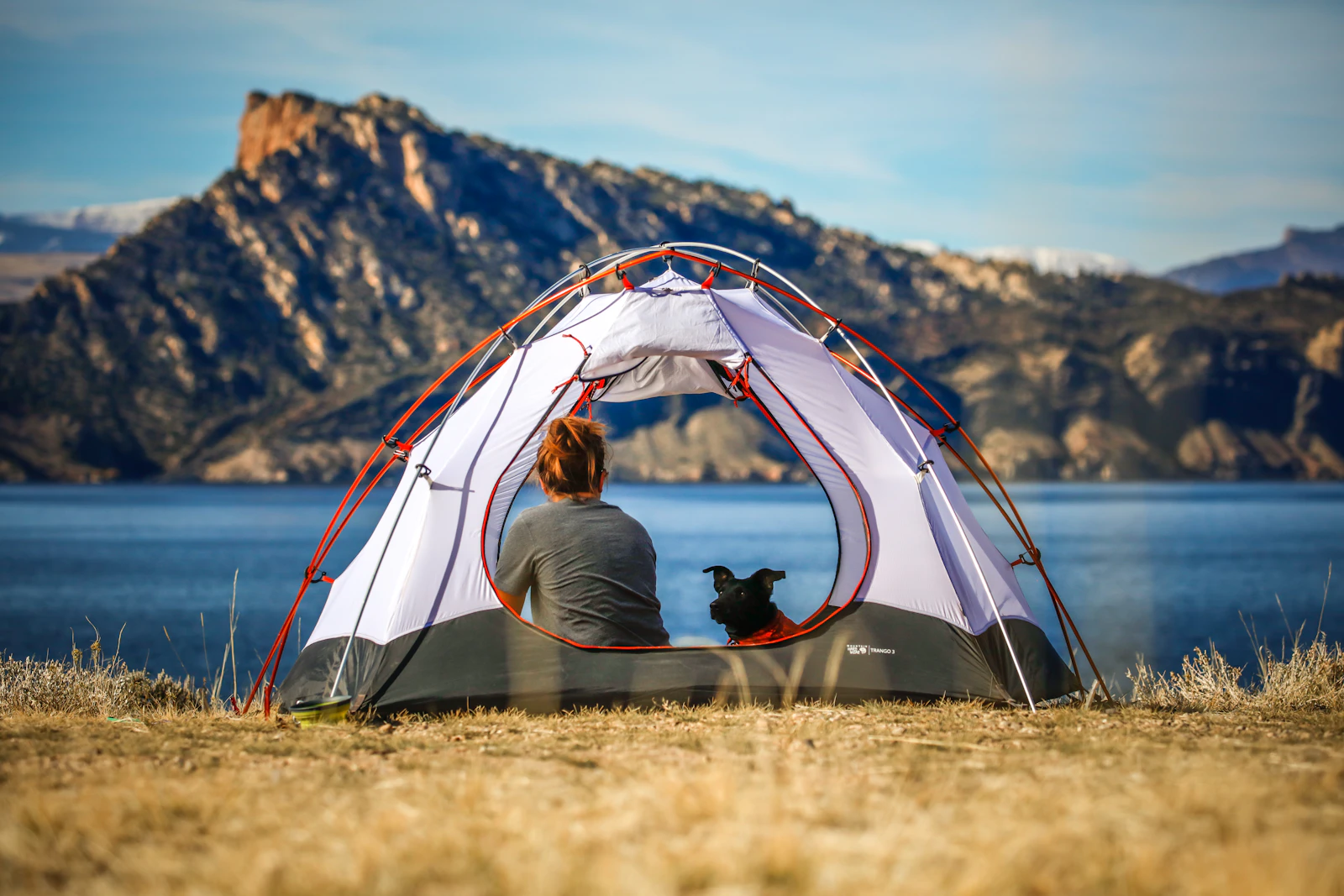
Add roughly 10–15 sq ft for a medium dog. A 3-person tent (35–45 sq ft) fits a couple plus a medium-sized dog if the dog sleeps on their own pad or at your feet. A large dog may require sizing up to a 4-person tent.
Related reading
Explore more
More from Camping & Outdoor
Independent editorial research. Zero pay-to-play.